
The Direct Answer: What Foods Are Best for Eye Health?
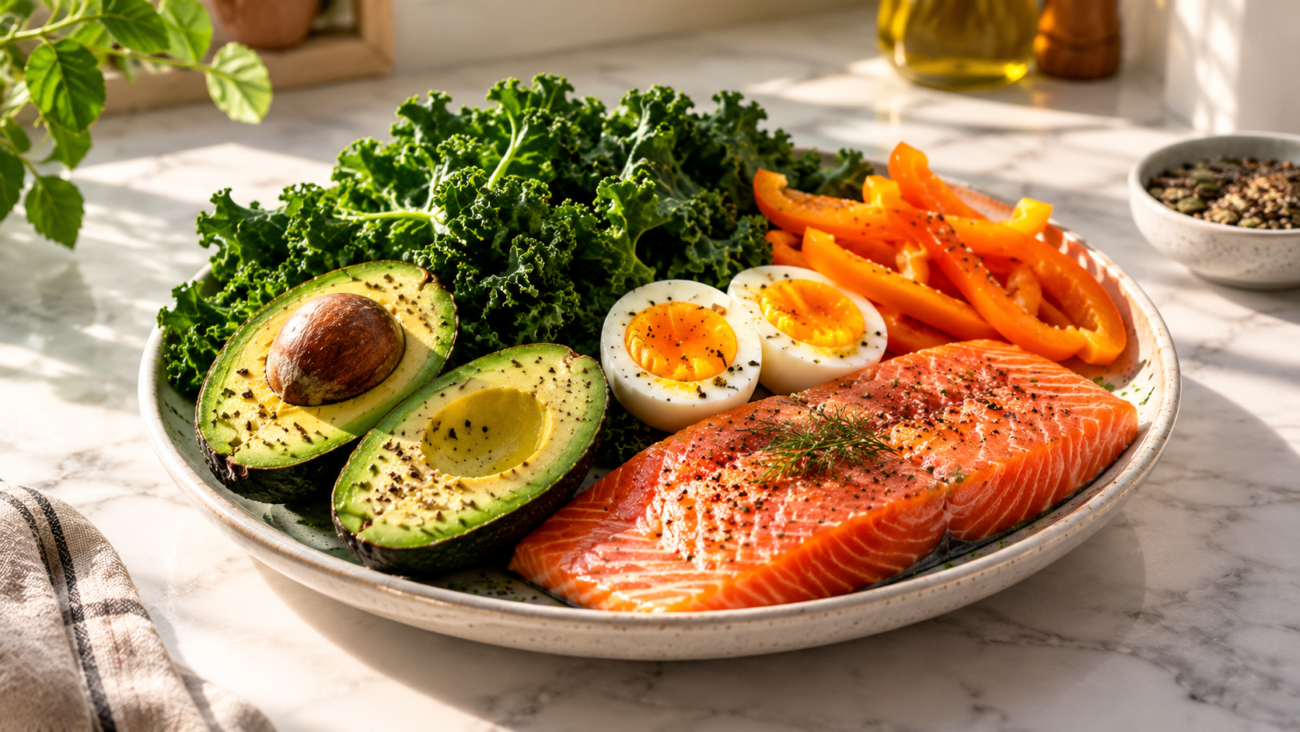
The best foods for eye health are those rich in macular carotenoids (lutein and zeaxanthin), long-chain omega-3 fatty acids (DHA), and antioxidant vitamins C, E, and zinc. Found abundantly in dark leafy greens, pasture-raised egg yolks, wild fatty fish, and colorful peppers, these nutrients filter phototoxic blue light, stabilize the ocular tear film, and protect retinal cells from oxidative degradation.
Understanding how these compounds navigate the gut-retina axis reveals how targeted daily nutrition can actively preserve your visual acuity and prevent age-related decline.
30-Second Quick Take
- Internal Sunglasses: Lutein and zeaxanthin (found in dark greens and egg yolks) accumulate directly in your macula, forming a biological shield against digital blue light and UV damage.
- Retinal Membrane Repair: DHA makes up over 50% of the structural fatty acids in your retina; consuming cold-water fish prevents dry eye disease and preserves photoreceptor integrity.
- The Absorption Rule: Carotenoids are strictly fat-soluble. Always pair leafy greens and colorful vegetables with healthy fats (like extra virgin olive oil or avocado) to boost absorption by up to 400%.
How Does Nutrition Directly Protect the Human Eye?
Your eyes are among the most metabolically active organs in your body, consuming oxygen at a rate higher than almost any other tissue.
This relentless metabolic activity, combined with continuous exposure to ambient light, generates substantial amounts of reactive oxygen species (ROS). Without adequate dietary antioxidant defenses, this localized oxidative stress degrades delicate photoreceptor cells in the retina.
code Code
Dietary Carotenoids & Lipids ──► Intestinal Absorption (Fat-Dependent)
                                         │
                                         ▼
                     Systemic Circulation via Lipoproteins (HDL/LDL)
                                         │
                                         ▼
                     Accumulation in the Retinal Pigment Epithelium (RPE)
                                         │
              ┌──────────────────────────┴──────────────────────────┐
              ▼                                                     ▼
   Macular Shield (Lutein/Zeaxanthin)                    Cellular Fluidity (DHA)
Filters 400–450nm High-Energy Blue Light            Maintains Photoreceptor Disc Turnover
The clinical consensus established by the National Eye Institute’s AREDS and AREDS2 trials confirms that targeted micronutrients stop the progression of Age-Related Macular Degeneration (AMD) and reduce cataract formation.
Beyond direct eye biology, gastroenterological research highlights the gut-eye axis: an inflamed, dysbiotic gut microbiome releases pro-inflammatory cytokines into circulation, speeding up ocular surface disease and retinal microvascular damage.
The Biological “Why”: The 3 Key Ocular Nutrients
1. Macular Carotenoids (Lutein & Zeaxanthin)
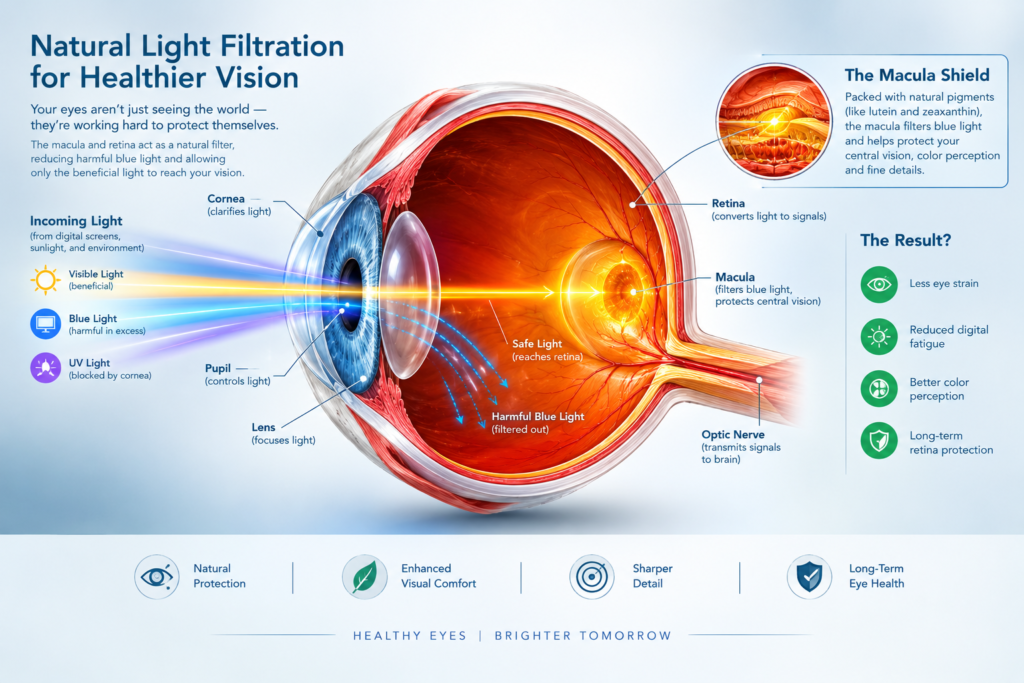
Lutein and zeaxanthin are the only dietary carotenoids that cross the blood-retinal barrier to accumulate in the central macula—the region responsible for sharp, detailed central vision.
Together, they form your Macular Pigment Optical Density (MPOD). This yellow pigment layer functions like built-in sunglasses, absorbing up to 90% of high-energy, short-wavelength blue light before it can damage photoreceptors.
2. Docosahexaenoic Acid (Omega-3 DHA)
The outer segments of your retinal rod and cone photoreceptors contain the highest concentration of DHA of any tissue in the human body.
DHA provides the high membrane fluidity required for rapid rhodopsin activation—the visual pigment that allows your brain to convert light into visual signals. Additionally, omega-3 fatty acids feed the meibomian glands along your eyelids, preventing rapid evaporation of the tear film that leads to chronic dry eye disease.
3. Zinc and Vitamin A (The Night Vision Complex)
Vitamin A is the molecular backbone of rhodopsin. When light strikes a rod cell, vitamin A changes shape, initiating an electrical nerve impulse to the visual cortex.
However, vitamin A cannot reach your eyes without zinc. Zinc acts as an indispensable enzymatic cofactor, mobilizing vitamin A from liver storage sites and transporting it across the retinal pigment epithelium to support nighttime and low-light vision.
Common Mistakes People Make With Eye Nutrition
- Relying Exclusively on Carrots: Carrots contain beta-carotene, an inactive precursor that your body must convert into active retinol. Due to variations in the BCMO1 gene, up to 45% of the population are poor converters, making direct sources of preformed carotenoids and vitamin A far more reliable.
- Eating Carotenoids Without Healthy Fats: Lutein, zeaxanthin, and vitamin A are completely fat-soluble. Eating a dry, fat-free raw kale or spinach salad means your small intestine will excrete almost all of these ocular compounds without absorbing them.
- Consuming High-Glycemic Diets: Chronic blood sugar spikes create Advanced Glycation End-products (AGEs). These compounds damage delicate retinal capillaries, leading to microvascular leakage and significantly elevating the risk of diabetic retinopathy.
The Top 5 Science-Backed Foods for Optimal Vision
code Code
┌─────────────────────────────────┬───────────────────────────────────────────┐
│ Functional Food Source          │ Primary Ocular Benefit                    │
├─────────────────────────────────┼───────────────────────────────────────────┤
│ Pasture-Raised Egg Yolks        │ Highly bioavailable lutein + zeaxanthin   │
├─────────────────────────────────┼───────────────────────────────────────────┤
│ Steamed Kale & Spinach          │ Maximum macular pigment density (MPOD)    │
├─────────────────────────────────┼───────────────────────────────────────────┤
│ Wild Alaskan Salmon & Sardines  │ High-potency DHA for tear film & retina   │
├─────────────────────────────────┼───────────────────────────────────────────┤
│ Bell Peppers (Orange & Yellow)  │ High-dose Vitamin C for collagen & lens   │
├─────────────────────────────────┼───────────────────────────────────────────┤
│ Pumpkin Seeds & Oysters         │ Bioavailable Zinc for retinal enzymes     │
└─────────────────────────────────┴───────────────────────────────────────────┘
1. Pasture-Raised Egg Yolks
While leafy greens contain more total lutein by weight, egg yolks offer the highest bioavailability.
The natural lipid matrix of the yolk contains phospholipids that automatically package lutein and zeaxanthin into easily absorbed micelles. Eating two eggs daily has been clinically shown to significantly increase MPOD scores without elevating systemic cardiovascular risk markers.
2. Cooked Dark Leafy Greens (Kale, Spinach, Collards)
Dark leafy greens are the richest natural reservoirs of lutein and zeaxanthin.
Cooking or lightly steaming your greens breaks down rigid plant cell walls, releasing the carotenoids from their intracellular matrix. Always drizzle your cooked greens with 1 to 2 tablespoons of extra virgin olive oil to maximize intestinal micelle formation and uptake.
3. Cold-Water Wild Fatty Fish (Salmon, Mackerel, Sardines)
Fatty fish provide preformed, bioavailable EPA and DHA that bypass the body’s inefficient conversion of plant-based ALA (flax, chia).
Consuming wild fatty fish twice a week directly fortifies the lipid layer of your tear film, dramatically improving symptoms of digital eye strain, gritty sensations, and chronic dry eye syndrome.
4. Bell Peppers and Citrus Fruits
Your eye’s crystalline lens concentrates high levels of vitamin C to shield internal proteins from photo-oxidation that leads to cataracts.
Orange and yellow bell peppers provide a powerful combination: they are packed with both zeaxanthin and more vitamin C per gram than oranges, providing essential structural support for the collagen in your cornea and sclera.
5. Pumpkin Seeds and Oysters
Oysters are the richest dietary source of zinc on the planet, with raw pumpkin seeds serving as an excellent plant-based alternative.
Regular zinc intake ensures steady enzymatic activity in the retina and prevents trace mineral deficiencies that contribute to poor night vision and premature macular aging.
Actionable Rules: How to Eat for Your Eyes Every Day
code Code
[ Breakfast ] ────► 2 Pasture-Raised Eggs cooked in Olive Oil (Lutein + Fats)
[ Lunch ]     ────► Massive Mixed Greens Salad with Avocado & Pumpkin Seeds
[ Dinner ] ────► 5 oz Wild Salmon + Roasted Bell Peppers & Steamed Broccoli- The “Fat-Pairing” Rule: Never consume colorful vegetables or greens naked. Always add avocado, olive oil, nuts, or butter to ensure carotenoid transport across the gut wall.
- The “Color Saturation” Strategy: Aim for at least two deeply pigmented plants per day—focusing on dark green, deep orange, and bright yellow to cover the full spectrum of protective carotenoids.
- Limit High-Heat Oxidized Seed Oils: Industrial seed oils (soybean, corn) are rich in unstable omega-6 fats that compete with anti-inflammatory omega-3s, promoting microvascular inflammation in retinal capillary beds.
Summary: Food Sources vs. Ocular Protection
| Food Category | Key Nutrients | Target Eye Structure | Recommended Intake |
| Pasture-Raised Eggs | Lutein, Zeaxanthin, Choline | Macula & Central Vision | 2 whole eggs daily |
| Dark Leafy Greens | Lutein, Beta-Carotene | Retinal Pigment Epithelium | 1–2 cups cooked daily |
| Fatty Cold-Water Fish | DHA, EPA, Astaxanthin | Meibomian Glands & Rod Cells | 2–3 servings per week |
| Bell Peppers / Berries | Vitamin C, Anthocyanins | Lens & Cornea | 1 cup daily |
| Seeds & Shellfish | Zinc, Copper, Selenium | Retinal Enzymes & Liver Transport | 2 tbsp seeds daily / Shellfish weekly |
Medical Disclaimer
The information provided in this article is for educational and informational purposes only and does not substitute for professional medical advice, diagnosis, or treatment. Always consult an optometrist, ophthalmologist, or qualified physician before making drastic changes to your diet or starting new nutritional supplements, particularly if you have been diagnosed with diabetic retinopathy, glaucoma, or advanced macular disease.