
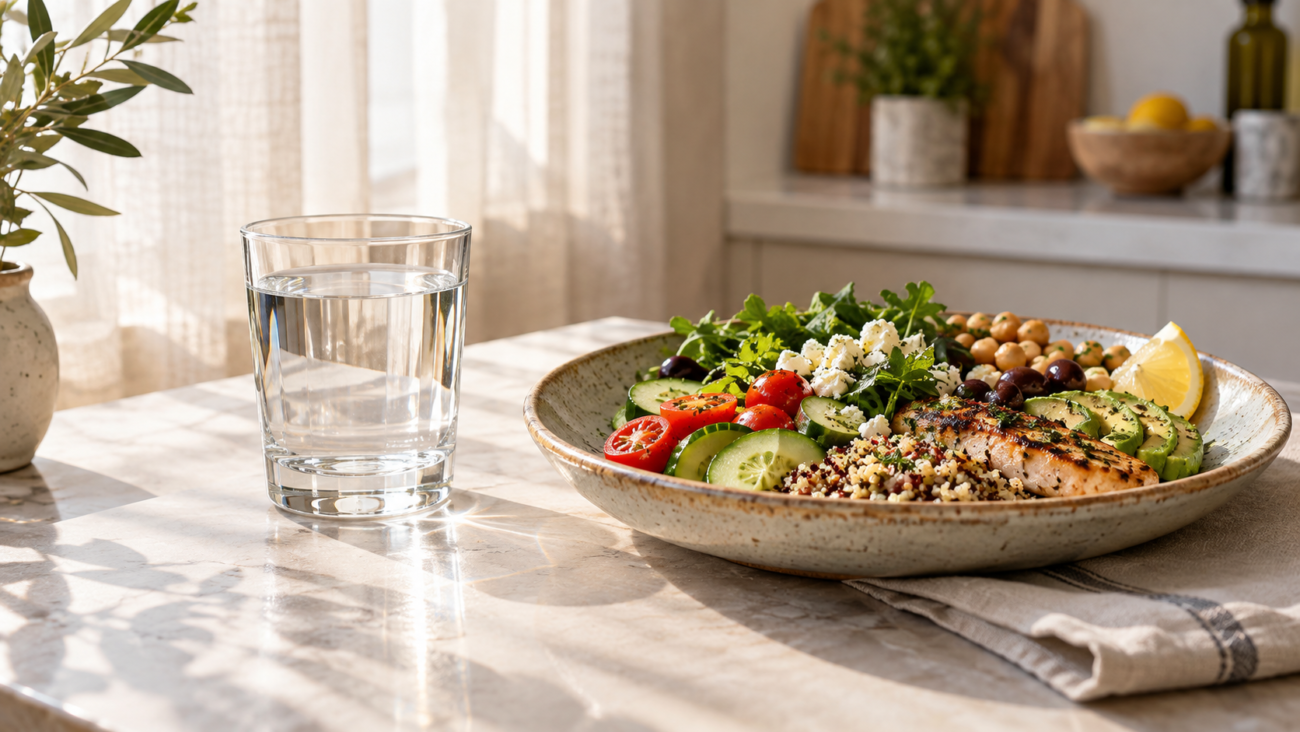
The Direct Answer: Should You Drink Water Right After Eating?
Drinking large volumes of water immediately after a meal impairs digestion by diluting essential gastric juices, temporarily raising stomach pH, and accelerating gastric emptying before nutrients are thoroughly broken down. This physiological disruption commonly triggers post-meal bloating, acid reflux, and suboptimal nutrient absorption.
Understanding how your gastrointestinal tract processes solids and liquids reveals why adjusting your hydration timing is one of the simplest, most effective upgrades for your metabolic health.
30-Second Quick Take
-
Dilutes Digestive Fire: Gulping water post-meal raises your stomach’s acidic pH (normally 1.5 to 3.5), blunting the activity of protein-digesting enzymes like pepsin.
-
Forces Premature Emptying: Excess fluid increases intra-gastric pressure, causing the stomach to dump partially digested food into the small intestine too early.
-
The Golden Timing Rule: Stop drinking 15 minutes before your meal, limit yourself to tiny sips while eating, and wait 30 to 45 minutes post-meal before hydrating fully.
What Actually Happens in Your Stomach When You Eat?
To understand why post-meal hydration can backfire, you must first look at the biochemical environment of the human stomach.
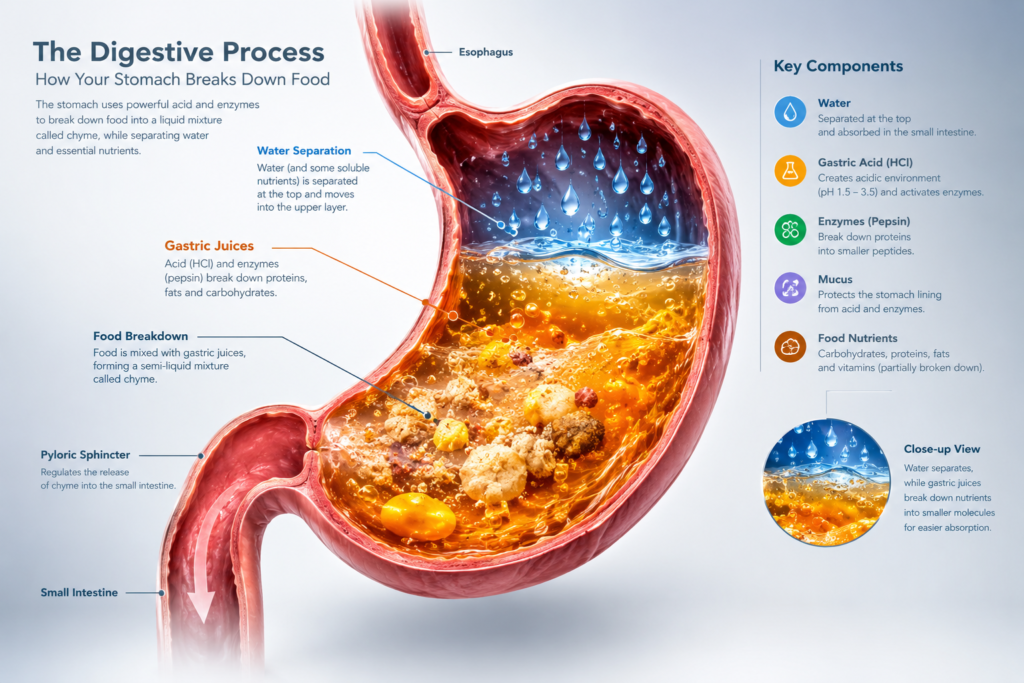
Your stomach is a mechanical and chemical blender. When solid food arrives, specialized parietal cells secrete hydrochloric acid (HCl), bringing your gastric pH down to an intensely acidic range of 1.5 to 3.5.
This sterile, highly acidic bath is mandatory for two non-negotiable processes:
- Enzyme Activation: Chief cells produce pepsinogen, an inactive precursor that requires high acidity to convert into pepsin, the primary enzyme responsible for breaking down dietary proteins into absorbable amino acids.
- Pathogen Elimination: Stomach acid sterilizes your food, neutralizing opportunistic bacteria and microbes before they enter the intestinal tract.
Once food is thoroughly liquefied by mechanical contractions and acid into a semi-fluid mass called chyme, the pyloric valve gradually meters it into the duodenum (small intestine) for systemic nutrient absorption.
How Post-Meal Water Disrupts Digestive Physiology
According to clinical observations documented across gastroenterological literature, flooding the stomach with liquids during or immediately after meals causes distinct physiological problems:
Physiological Mechanism | Clinical Consequence |
Gastric Acid Dilution | Incomplete protein breakdown & dysbiosis |
Accelerated Gastric Emptying | Premature transit of large food particles |
Increased Intra-Gastric Volume | Lower Esophageal Sphincter (LES) reflux |
Rapid Carbohydrate Flushing | Sharp postprandial blood glucose spikes |
SEO Meta Title: Why You Shouldn’t Drink Water Immediately After Meals: The Science Explained
SEO Meta Description: Drinking water immediately after eating can trigger bloating, acid reflux, and sluggish digestion. Discover the biological science and ideal hydration timing.
The Direct Answer: Should You Drink Water Right After Eating?
Drinking large volumes of water immediately after a meal impairs digestion by diluting essential gastric juices, temporarily raising stomach pH, and accelerating gastric emptying before nutrients are thoroughly broken down. This physiological disruption commonly triggers post-meal bloating, acid reflux, and suboptimal nutrient absorption.
Understanding how your gastrointestinal tract processes solids and liquids reveals why adjusting your hydration timing is one of the simplest, most effective upgrades for your metabolic health.
⚡ 30-Second Quick Take
- Dilutes Digestive Fire: Gulping water post-meal raises your stomach’s acidic pH (normally 1.5 to 3.5), blunting the activity of protein-digesting enzymes like pepsin.
- Forces Premature Emptying: Excess fluid increases intra-gastric pressure, causing the stomach to dump partially digested food into the small intestine too early.
- The Golden Timing Rule: Stop drinking 15 minutes before your meal, limit yourself to tiny sips while eating, and wait 30 to 45 minutes post-meal before hydrating fully.
What Actually Happens in Your Stomach When You Eat?
To understand why post-meal hydration can backfire, you must first look at the biochemical environment of the human stomach.
Your stomach is a mechanical and chemical blender. When solid food arrives, specialized parietal cells secrete hydrochloric acid (HCl), bringing your gastric pH down to an intensely acidic range of 1.5 to 3.5.
Meal Ingestion ➔ Gastric Juices Secreted (pH 1.5–3.5) ➔ Food Liquefied into Chyme ➔ Pyloric Sphincter Releases to Intestine
                                      │
                         [Add Large Glass of Water]
                                      ▼
             Diluted HCl + Increased Pressure = Reflux & Poor Breakdown
This sterile, highly acidic bath is mandatory for two non-negotiable processes:
- Enzyme Activation: Chief cells produce pepsinogen, an inactive precursor that requires high acidity to convert into pepsin, the primary enzyme responsible for breaking down dietary proteins into absorbable amino acids.
- Pathogen Elimination: Stomach acid sterilizes your food, neutralizing opportunistic bacteria and microbes before they enter the intestinal tract.
Once food is thoroughly liquefied by mechanical contractions and acid into a semi-fluid mass called chyme, the pyloric valve gradually meters it into the duodenum (small intestine) for systemic nutrient absorption.
How Post-Meal Water Disrupts Digestive Physiology
According to clinical observations documented across gastroenterological literature, flooding the stomach with liquids during or immediately after meals causes distinct physiological problems:
code Code
┌─────────────────────────────────┬───────────────────────────────────────────┐
│ Physiological Mechanism         │ Clinical Consequence                      │
├─────────────────────────────────┼───────────────────────────────────────────┤
│ Gastric Acid Dilution           │ Incomplete protein breakdown & dysbiosis  │
├─────────────────────────────────┼───────────────────────────────────────────┤
│ Accelerated Gastric Emptying    │ Premature transit of large food particles │
├─────────────────────────────────┼───────────────────────────────────────────┤
│ Increased Intra-Gastric Volume  │ Lower Esophageal Sphincter (LES) reflux   │
├─────────────────────────────────┼───────────────────────────────────────────┤
│ Rapid Carbohydrate Flushing     │ Sharp postprandial blood glucose spikes   │
└─────────────────────────────────┴───────────────────────────────────────────┘
1. It Weakens Gastric Acid and Inactivates Enzymes
Gulping 250 to 500 milliliters of water immediately after finishing a meal increases the fluid volume of the gastric pool.
While healthy stomachs can adapt to small amounts of fluid, a sudden flood of cold or room-temperature liquid raises gastric pH. This dilution reduces the concentration of free hydrochloric acid, slowing down pepsin activation and leaving complex proteins only partially broken down.
2. It Accelerates Gastric Emptying (The “Washout” Effect)
Liquids empty from the stomach substantially faster than solids. When you consume a heavy volume of liquid with semi-solid food, the liquid creates rapid transit pathways.
Studies indexed in PubMed show that excessive liquid consumption can cause premature gastric emptying. This means food fragments enter the duodenum before achieving proper liquefaction, placing an unnatural burden on pancreatic enzymes and your intestinal microbiome.
3. It Increases Intra-Gastric Pressure and Triggers Acid Reflux
Your stomach has a finite capacity. Introducing a full meal alongside 16 ounces of water expands the stomach walls significantly.
This expanded volume creates mechanical upward pressure against the Lower Esophageal Sphincter (LES)—the muscular ring that prevents stomach contents from backing up. When the LES is forced open under pressure, acidic gastric juices splash into the esophagus, producing heartburn, chest burning, and chronic acid reflux.
4. It Disrupts Blood Sugar Stability
When meals are flushed rapidly into the proximal small intestine via fluid overload, simple carbohydrates and starches are exposed to intestinal brush-border enzymes much faster than intended.
This accelerated transit can trigger faster postprandial glucose absorption, leading to elevated insulin spikes followed by reactive energy crashes shortly after eating.
Common Mistakes People Make With Mealtime Hydration
- Chugging Ice-Cold Water: Freezing temperatures cause localized vasoconstriction of the gastric mucosa, slowing gastric motility and causing dietary fats to solidify, making them harder for bile salts to emulsify.
- Using Water to “Wash Down” Unchewed Food: Drinking water to swallow dry, poorly chewed food bypasses the first stage of digestion: mastication and the release of salivary amylase, which initiates carbohydrate breakdown in your mouth.
- Drinking Carbonated Beverages: Fizzy water or sodas release carbon dioxide gas in the stomach, dramatically raising intra-gastric pressure and causing immediate belching and acid regurgitation.
What You Should Do Instead: The Ideal Hydration Timing Protocol
You do not need to dehydrate yourself to optimize digestion. You simply need to align your fluid intake with your body’s natural digestive timeline.
1. Drink 30 Minutes Before Meals
Drink 1 to 2 glasses of pure water 30 minutes before your meal. This ensures systemic hydration, stimulates digestive tract blood flow, and supports the protective bicarbonate-rich mucus layer lining your stomach wall without diluting your incoming gastric secretions.
2. Restrict Fluid to Small Sips During Meals
If you need liquid to swallow supplements or clear your palate, limit it to 3 to 4 ounces (100 ml) of warm or room-temperature water. Small sips do not negatively impact gastric pH and can help soften dry food textures.
3. Wait 30 to 45 Minutes Post-Meal Before Full Hydration
Allow your stomach to perform its primary chemical liquefaction uninterrupted.
- For light meals (fruits, smoothies, broths): Wait 30 minutes.
- For dense, protein- or fat-heavy meals (meat, eggs, complex grains): Wait 45 to 60 minutes.
4. Optimize Chewing to Eliminate Post-Meal Thirst
If you feel intense thirst while eating, you are likely eating too fast. Chew each mouthful until it reaches a liquid consistency. Saliva provides the natural lubrication required to swallow effortlessly, eliminating the instinct to reach for a glass.
Summary: Hydration Timing vs. Digestive Impact
| Phase | Recommended Water Intake | Effect on Digestion |
| 30 Mins Before Eating | 250–350 ml (Full glass) | Preps stomach lining; prevents overeating |
| During the Meal | Max 50–100 ml (Small sips) | Helps swallow dry food without raising pH |
| Immediately After | Zero / Avoid | Prevents acid dilution, bloating, and reflux |
| 45+ Mins After Eating | Resume regular hydration | Supports downstream intestinal nutrient uptake |
Medical Disclaimer
The information provided in this article is for educational and informational purposes only and is not intended as medical advice. Always consult a qualified physician or gastroenterologist before making significant changes to your diet, fluid intake routines, or lifestyle—especially if you have been diagnosed with Gastroesophageal Reflux Disease (GERD), gastroparesis, or other chronic gastrointestinal disorders.